
Today’s blog post is a little different from the usual fare: it comes to you (largely) in picture form.[1] I thought that today I’d share one of the more unique opportunities that teaching English to French students over the summer has given to me: the chance to indulge my unique drawing skills.
Alright, I can’t actually draw for toffee. I am, however, a fan of diagrams, and one of the things that I’ve noticed throughout my six weeks of teaching has been that my students respond well to this kind of stimulus. As a result, I started using my own little doodles and diagrams to communicate ideas, whether they be grammatical concepts or aspects de civilisation such as the structure of the NHS. Here, then, are a couple of my personal favourites, each one of which is guaranteed to liven up a lesson all on its own.
(1) Insurrection against subjugated knowledges
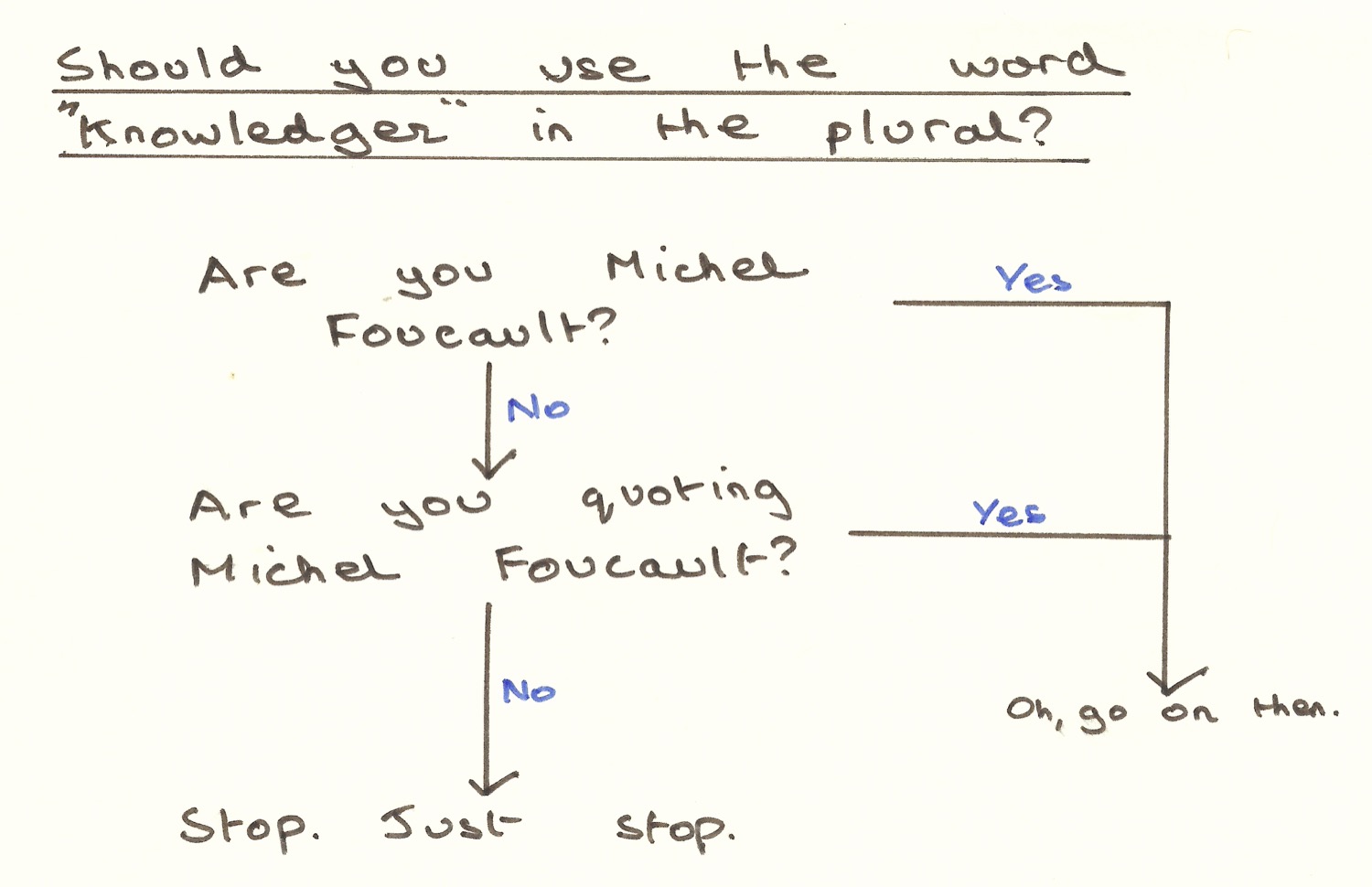
This is one of the earliest diagrams that I used, and it’s a surprisingly effective way of getting across the concept of uncountable nouns. English has a few of these, and ‘knowledge’ is one of them: while the French connaissance(s) can be singular or plural, using ‘knowledges’ in English is sufficiently rare that it marks you out as trying to impersonate Michel Foucault and his ‘insurrection of subjugated knowleges’. I’d hope that this kind of example makes a welcome change from the usual explanation, ça ne se dit pas.
(2) Depeche Modal
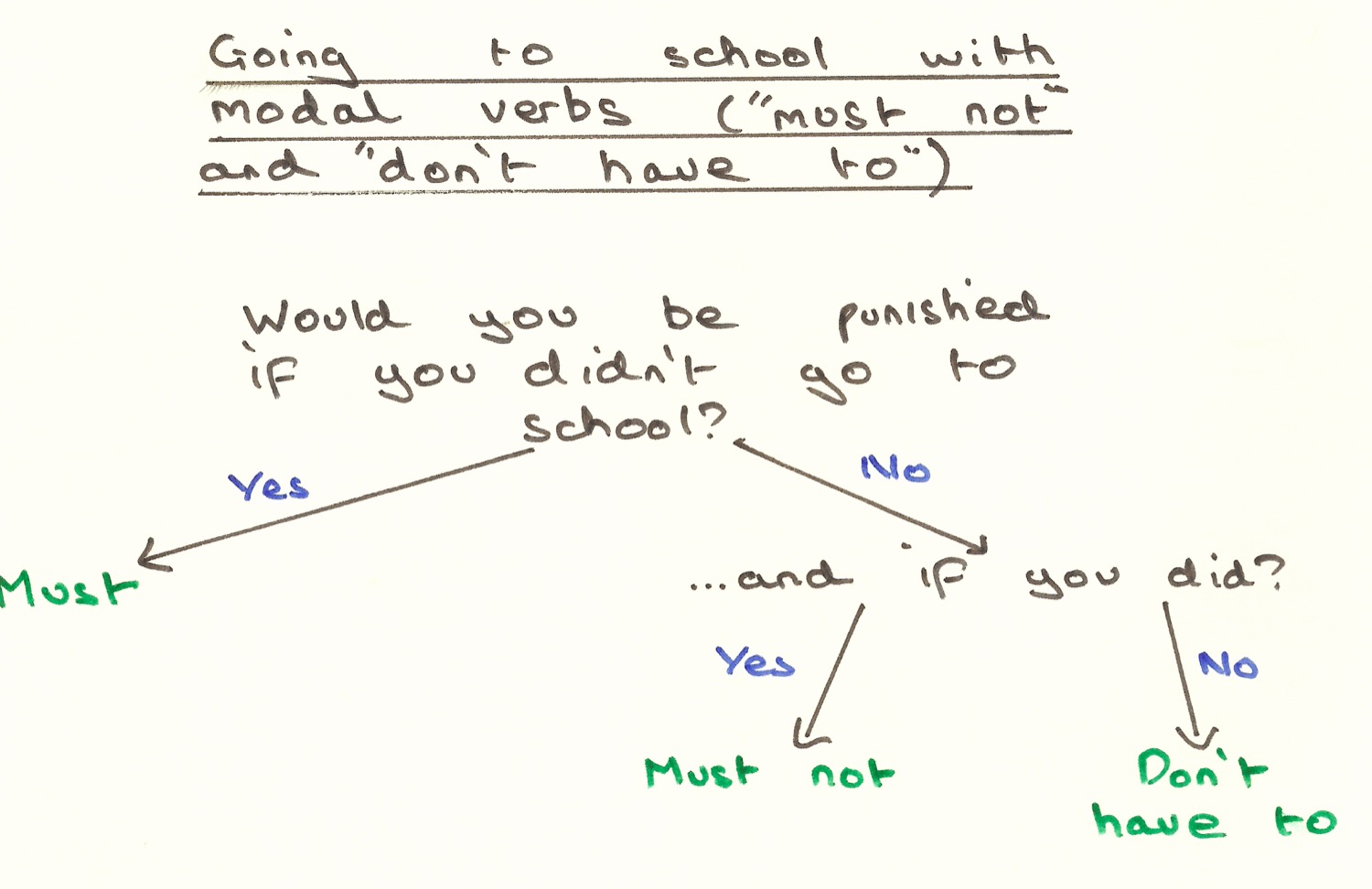
Modal verbs in English are, to put it mildly, complicated. When you find yourself having to explain that ‘must’ and ‘have to’, both of which are technically verbs of obligation, are also used for suggestion, you know that you’re in for a long lesson. An area of particular confusion was the difference between ‘I mustn’t’ and ‘I don’t have to’: to a French speaker, il ne faut pas faire and il faut ne pas faire sound identical in meaning (and indeed the latter is borderline ungrammatical). That’s where this diagram came in. A useful further example here was the case of Harry Potter’s punishment in Order of the Phoenix, where the words ‘I must not tell lies’ appear on his hands as he writes lines. Of couse, that does require your student to be familiar with Harry Potter, although judging by the number of people I saw in Waterstone’s buying Cursed Child last Tuesday, I suspect he or she, whomever they are, probably is.
(3) The Circle of Fees
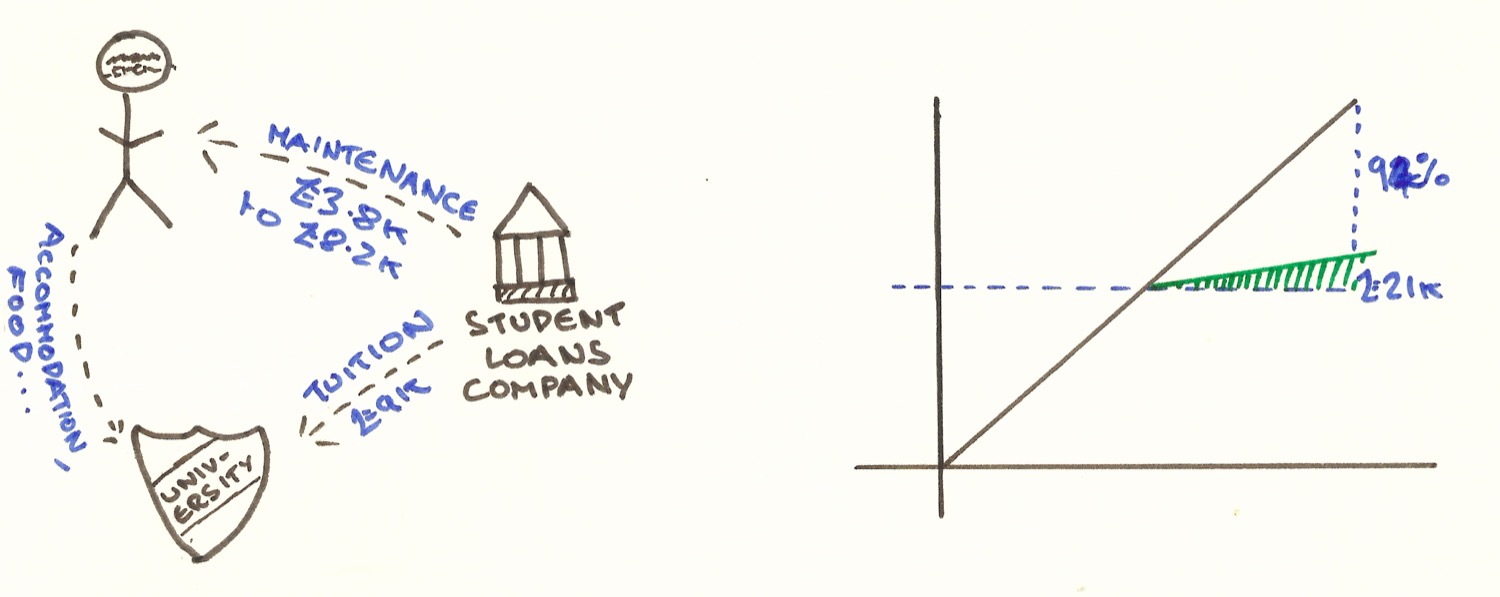
I like to adapt this one to the students in the class (here I’m using myself as the model). The idea, though, always remains the same: to get across the machinations of student finance in a way that refocuses the discussion back onto its impact on the individual student. The graph to the right represents student loan repayments as a percentage of earnings; obviously it isn’t to scale!
(4) Comparing Health Systems
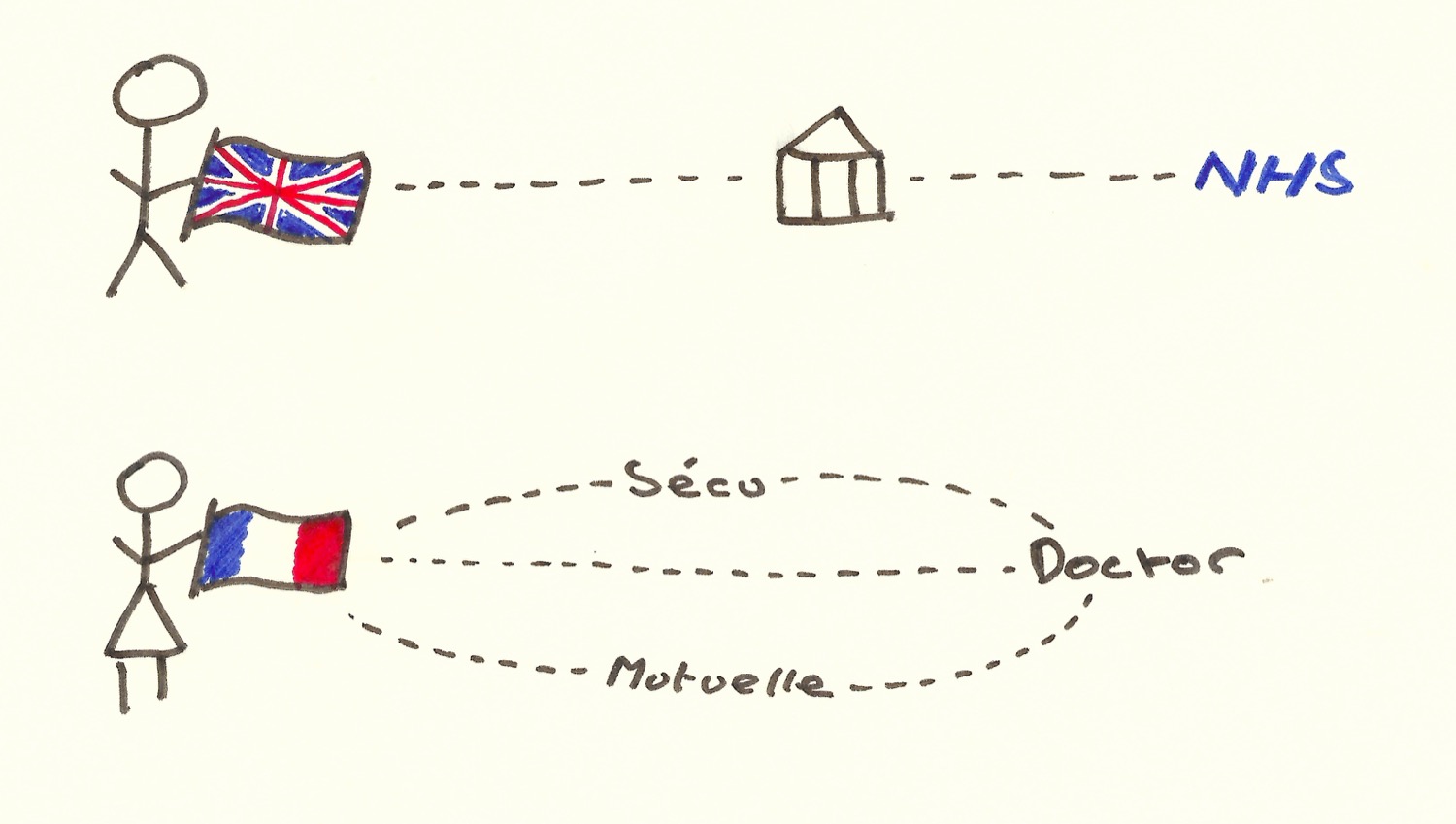
This one is all about teaching a complex civilisation point: the ‘patient experience’ within the NHS, in particular the question of who pays. Aiming to communicate the idea of a ‘single-payer’ system, the British portion of the diagram focuses on the role of the government raising funds through taxation which it then uses to fund the NHS, whereas the French system is shown as more fragmented (with possible costs to the patient including doctors’ fees; la sécurité sociale; and their mutuelle). This often heralds the start of a lively debates on the merits of each model in turn.
(5) SPAAAAAACE!
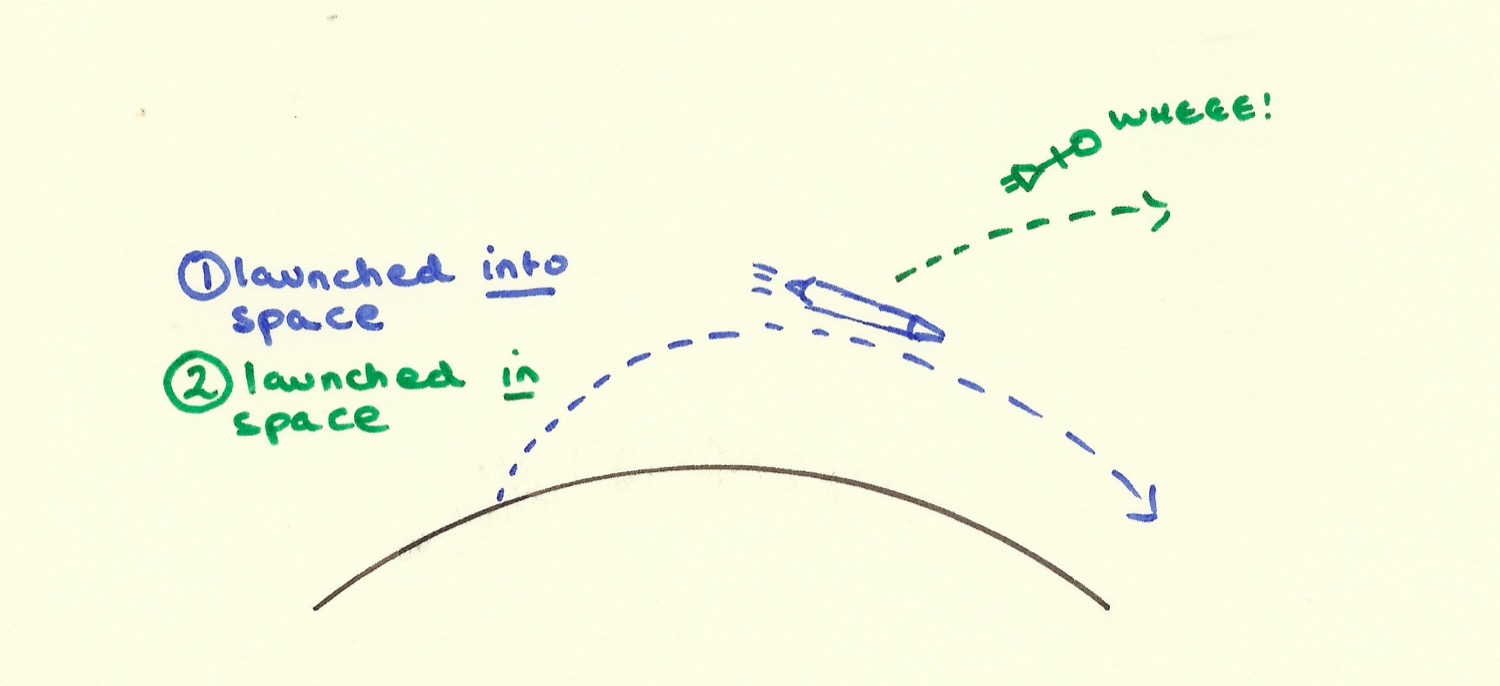
To conclude on a lighter note: a quick doodle born on a long Tuesday afternoon, designed to convey the difference between the commonly-used phrase ‘launched into space’ and the erroneous (but funny) ‘launched in space’.
1 A quick acknowledgement: for the style of this blog post, I’m deeply indebted to Anna Railton, who runs an excellent blog about rowing and cycling and who inspired me to use doodles more generally. To any rowers who are reading this, I’d heartily encourage you to buy a copy of her Rowing: The Rules poster.[↵]
Cover image: WalrusWaltz on Flickr, used under a Creative Commons attribution license.
 Edward Mills
Leave a comment